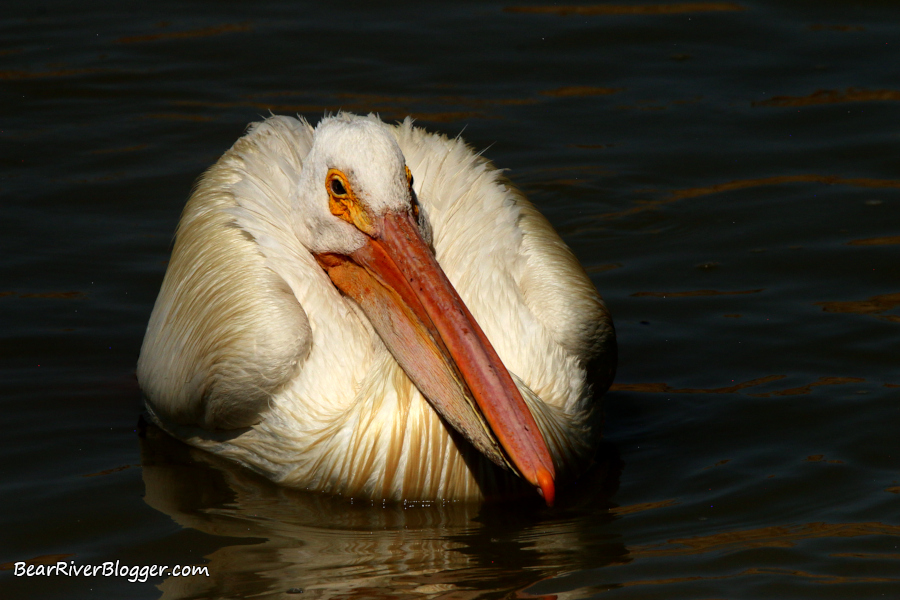

If I were put on the spot to declare my top 5 all-time birds to watch and photograph, the American white pelican would, without any hesitation or reservation, surely make the list, quite possibly only being kept out of the number one slot by, obviously, the great horned owl, but that’s a discussion meant for another day.
Interestingly enough, I’ve only seen one brown pelican, a rarity here in Utah, mind you, in my life when one spent a few weeks or more on the Bear River several summers ago, but it, too, would be included with the white pelican on that list because, well, after all, it’s still a pelican, right?
(Advertisement)

Pelicans of either species are so interesting to me when the opportunity arose four years ago to photograph and write about capturing, tagging, and releasing American white pelicans back into the wild with satellite transmitters as part of a PhD dissertation study by Aimee Van Tatenhove, a USU grad student at the time, I jumped at the chance of potentially getting real close to one of my favorite birds, hopefully even holding and releasing a pelican if I get my wish and, of course, we get a successful capture.
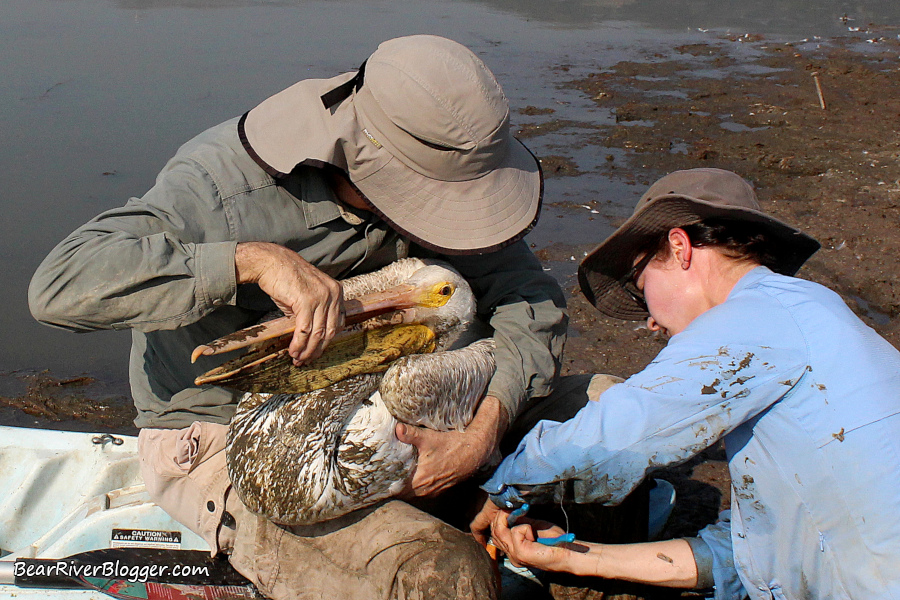
After many long, hot hours of sitting and waiting as we watched the traps from a distant gravel parking lot at Farmington Bay WMA, success was finally achieved when the traps caught one of several pelicans that were loafing in the shallow wetlands to the east of us.
Affectionately named Calvin, the large pelican was promptly removed from the trap, measured, tagged with both an aluminum leg band and a solar-powered satellite transmitter, and released by yours truly, of course, back into the wild, but not before I learned a couple of things about pelicans from Aimee that I had not known before.
While her father was holding the pelican to be measured and fitted with the transmitter and leg band, Aimee instructed to make sure the pelican’s beak was left slightly open but still held firm for both the bird’s as well as our own safety.
Aimee pointed out that pelicans cannot breathe when their mouths are closed, which is why she instructed all who were to handle and release the large sea bird to make sure their beak was held slightly open so the bird could breathe during the examination.
(Advertisement)
(As an Amazon Associate, I earn from qualifying purchases.)
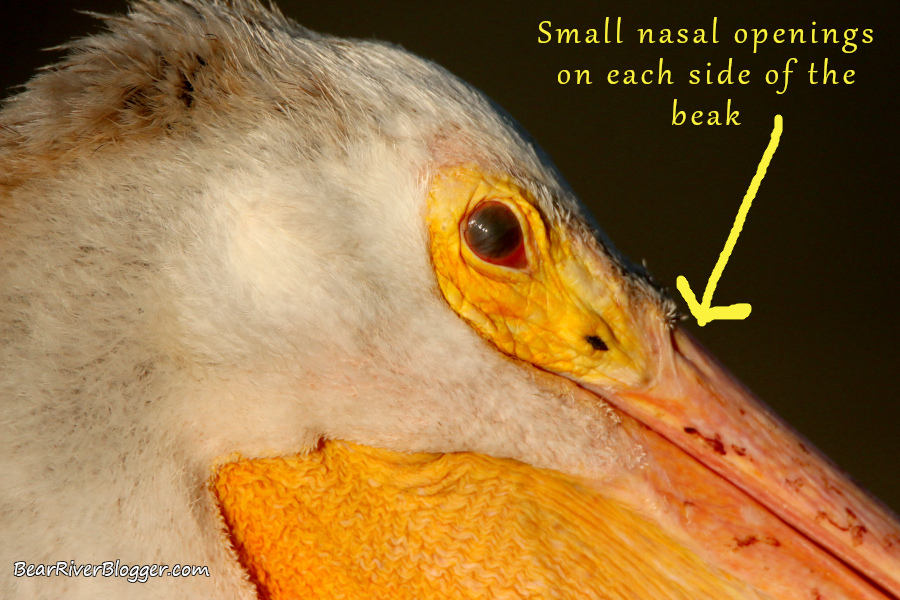
She further mentioned that pelicans don’t have nostrils of the same sort as many other birds do, and the nostril openings they do have aren’t used for breathing but are small slits just below their eyes with special desalinating glands to pull salt from the blood, which then drains from the body through these small nasal slits just below the eyes.
Pelicans, especially brown pelicans, spend a lot of time around saltwater environments, such as the ocean, coastal lagoons, and brackish estuaries, in search of fish to feed upon which increases their salt intake each time they dive, brown pelicans only, or dip their bill to scoop up small fish.
Too much salt in their blood would, unfortunately, be fatal for both brown and white pelicans so their nasal glands and slits allow for these sea-faring birds to successfully live in such salty environments by cleansing the salt from their bodies but, however, there is a cost with no nasal passages that allow for airflow, they simply have to keep their beaks open a little to breath.
If you think about it, a pelicans beak, both the brown species that dives, and the white variety that dips its bill, spends a lot of time underwater so having these nasal slits mostly closed off, except for allowing outward drainage, makes a lot of sense as it keeps water from constantly entering the nasal cavity which would affect the very important function of salt excretion.
This also means pelicans have no sense of smell, per se, but with very few exceptions in the bird world, one being turkey vultures that do rely a lot on their olfactory senses to find carrion, most other birds actually have a very poor sense of smell, so not having normal nasal cavities isn’t really a detriment for pelicans anyway.
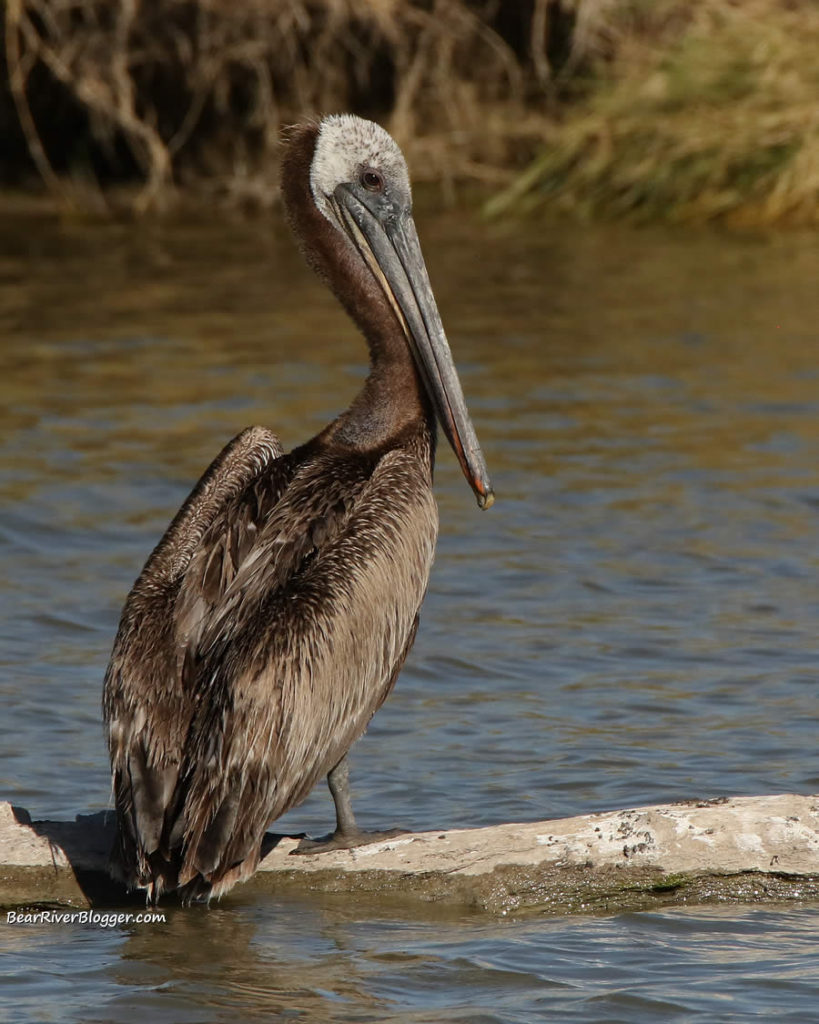
While we are on the subject of a pelican’s beak, during the summer, you might notice a large knob on some white pelicans, and on others, it is noticeably absent.
Researchers aren’t sure why this knobby bump, known as a caruncle and is found on both sexes, grows only on American white pelicans during breeding season but falls off shortly after the eggs are laid.
If you look closely at American white pelicans on the Bear River Migratory Bird Refuge auto tour route, or wherever you find them in your neck of the woods, you will notice many pelicans that have this strange growth on their beaks and many that don’t, basically giving an indication of which pelicans are actively nesting.
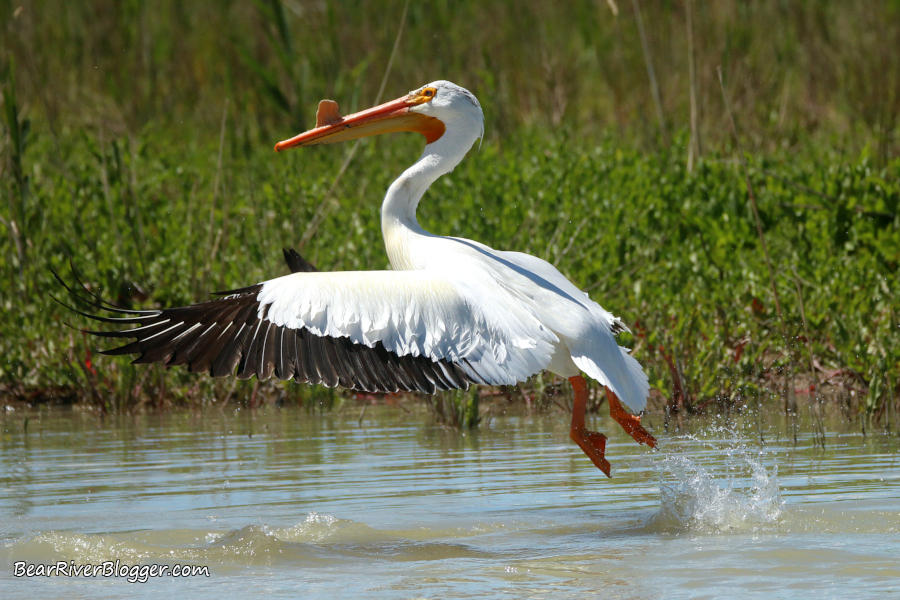
Traditionally, the Bear River Migratory Bird Refuge is only a few short miles from one of the largest American white pelican breeding colonies in North America, Gunnison Island which is remotely located in the northern arm of the Great Salt Lake, where hundreds upon hundreds of hungry pelicans, even thousands of birds in some years, leave their chicks each day on the island so they can feed upon the plentiful offering of fish found in the refuge’s shallow wetlands, making for a great opportunity for you and I to view and photograph these aerial acrobats in flight and on the water all along the 12-mile auto loop.
So next time you see a pelican think about how different it is from other birds with not having normal functioning nasal passages.
Learning and sharing little tidbits of information like this is what helps others get interested in birdwatching and that’s the main focus of our website and why we spend so much time in nature behind our camera.
If you are a birdwatcher, nature photographer, or, like me, both, I suggest signing up for email notifications for future blog posts where I share my love for birds and nature through photography and the written word.