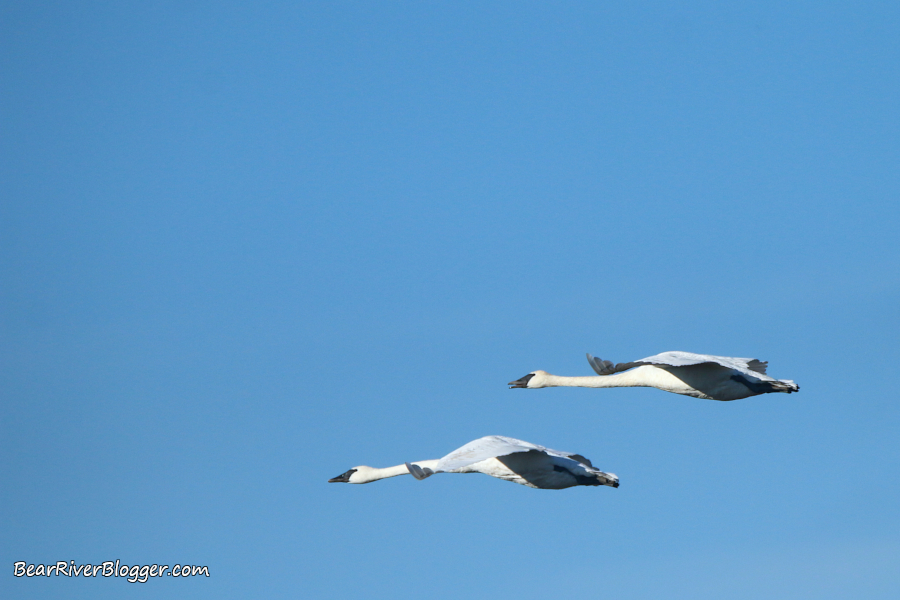

Today, while on a short 3-mile bike ride, the prevailing pre-dawn silence was broken by a most familiar sound, one that I hear numerous times of day during fall, in fact, and something as an avid birdwatcher I hope I’ll never get tired of hearing.
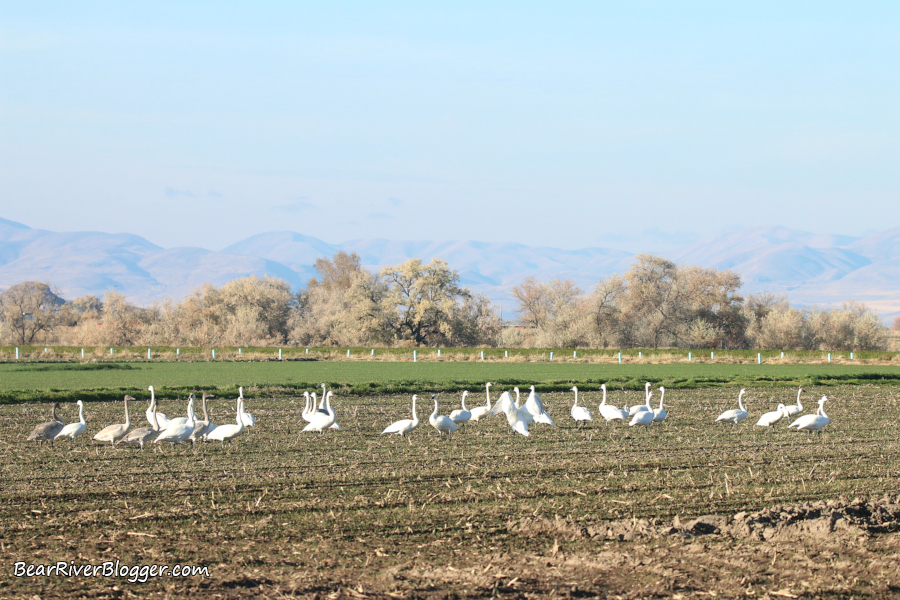
It was a flock of trumpeter swans headed for a nearby corn field to feed and rest for the day that interrupted my solitary early morning ride, and those very unique, low-toned honks, interestingly enough, only added to the peace and tranquility of the morning.
(Advertisement)

For me, personally, this is what the month of November is all about, not a perfectly oven-roasted turkey or a slice of pumpkin pie adorned with a side of ice cream but time spent enjoying the migrating trumpeter swans and listening to their unique trumpet calls as they fly just overhead.
Northern Utah has both tundra and trumpeter swans migrating through each fall and Box Elder County seems to be a preferred hot-spot for the much larger trumpeters that spend most of their day in the local farm fields as opposed to the Bear River Migratory Bird Refuge and surrounding wetlands where the tundra swans prefer to feed and loaf in until they migrate to California for the season.
In years with mild winters, ones without heavy snowfall and accumulation, the trumpeter swans are actually staying put and wintering in Box Elder County, Utah, even after a deep freeze has pushed out almost all of the tundra swans to a warmer location further south that offers an abundance of open water to feed in.
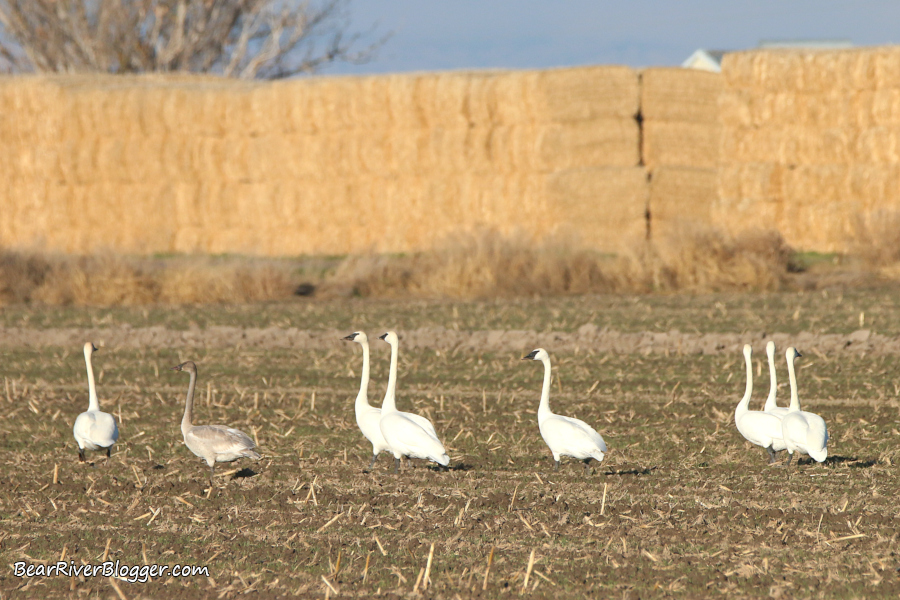
This makes for some great birdwatching for anyone who has an interest in seeing the iconic trumpeter swan in real life, something that isn’t easy to do when compared to the much more numerous tundra swans that frequent the Bear River Migratory Bird Refuge during both fall and spring migration and are quite viewable in very large numbers during late February and early March for a few weeks.
Numbers from the Utah Division of Wildlife Resources Great Salt Lake aerial swan survey have tundra swan numbers peaking around 25,000 during late November, but out in the farm fields of Box Elder County trumpeter swans are seen in flocks as small as 4 birds or even as many as 100, from my own observation that is.
(Advertisement)
(As an Amazon Associate, I earn from qualifying purchases.)
Unfortunately, unlike the tundra swan, nobody really knows just how many trumpeter swans migrate through Utah, since from afar they are very similar in appearance to the far more common tundra swan and can only be distinguished on the wing by their distinct calls or a few other characteristics only discernible when viewed up close.
Trumpeter swan numbers are substantially fewer than the smaller-sized tundra swan but far more viewable during fall migration, in my opinion, because they are commonly found in farm fields during the morning through the early afternoon hours, making them more easily viewed from a vehicle whereas most of the tundra swans this time of year are living on private wetlands or closed areas on the bird refuge, far from any public access, so viewing them is not really an option until spring migration brings them back.
10 years ago, I would have been hard-pressed to find a trumpeter swan at all in Utah.
In fact, I actually had no idea they even migrated here until 5 years ago when I saw a small flock of swans in the same corn field for weeks on end and I started to watch them more intently since it’s rare to see tundra swans in corn fields so far away from wetlands that still have open water to feed in.
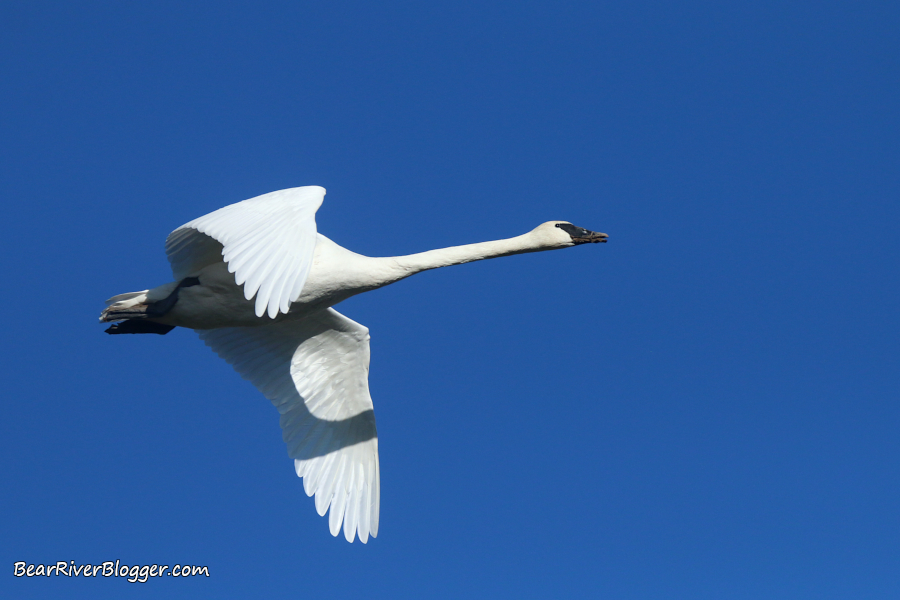
Now I’d say, however, trumpeter swans are quite easy to find in Utah, if you know when and where to look, that is, during fall and winter as their numbers seem to be increasing each and every year, and I see them literally daily when I am out on one of my birdwatching excursions up by the Bear River Migratory Bird Refuge.
With their distinct low-toned trumpet call, I usually hear trumpeter swans flying my way long before I see them.
It’s not fully understood where these trumpeters are coming from, but a biological study is underway to try and match up DNA taken from locally harvested trumpeter swans during previous years when they were still legal to hunt with feathers from known nesting sites up north to see which population these swans belong to.
So far, at the time of this writing, at least, I haven’t heard back about the study, but when I do a blog post will be in the works, so subscribe to our website and stay tuned for more on that when information becomes available.
I do know, however, that some of these trumpeter swans have migrated from Ennis, Montana, in past years, and an upcoming blog post will have more information about how I came across that fact.
All in all, November is a month for migrating swans, both the more numerous tundra swan and the much larger but less common trumpeter swan and I can think of fewer birds I like to see this time of year than a trumpeter swan so I am glad when we have mild winters and I can watch and photograph them almost anytime I want when I am in the vicinity of the famous Bear River Migratory Bird Refuge.
(What does a trumpeter swan sound like? For short nature photography tips and interesting stories about the natural world around us, subscribe to our Bear River Blogger channel on YouTube for videos and updates from our travels while out in nature, both on and off of the famed Bear River Migratory Bird Refuge.)