
When it comes to photographing birds, I am one who definitely relishes chasing those near-perfect but rare lighting conditions that give us very fast shutter speeds, brilliant bands of color, and incredible detail, all hopefully coming together nicely for a crisp, sharp, and well colored image that every bird photographer, myself included, simply dreams of.
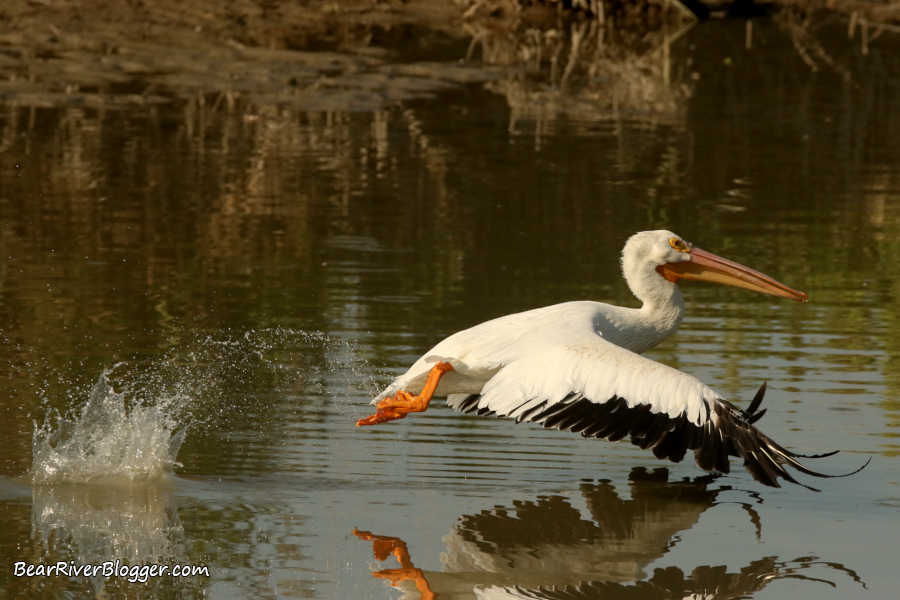
To give an example of such a quest, most of my summer mornings are spent with the rising sun looking for and photographing pelicans on the wing in search of, dare I say, a perfect bird in flight image, one that, in my own opinion, does exist but I have yet to bring home despite many years of photographing pelicans.
(Advertisement)

And to narrow it down even more, I’ve been focusing on photographing these large birds while taking off from the water on the Bear River Migratory Bird Refuge auto tour route, where it is quite common this time of year to find solitary pelicans feeding and loafing in the roadside canals and nearby shallow wetlands.
It might surprise you to learn for many years now in pursuit of that perfect bird in flight image I found myself following the advice of other prominent bird photographers whose work garners my admiration and, admittedly as a result, I just stayed home when lighting conditions were anything less than perfect for the first couple hours of the day, aka what nature photographers commonly refer to as the “golden hour” to be more precise.
Each and every morning I would literally wake up well before the rooster crowed and go outside to check the night skies for even the smallest glimpse of any clouds, resulting in me either going back to bed if there were more than just a few small, random patches or packing up my camera gear and heading out to the bird refuge 12-mile auto loop if the sky was clear.
It sounds silly, I know, but this rudimentary method worked well, or so I thought back then, for on those days when lighting was near perfect, I did come home with some incredible, still not perfect, mind you, flying pelican photographs.
The only caveat was, however, I simply had no idea what I was potentially missing each morning I stayed home when the prevailing light was less than perfect, well, at least by bird photography standards that is.
(Advertisement)

(As an Amazon Associate, I earn from qualifying purchases.)
It wasn’t until last summer when I truly realized my mistake by staying home all those years and how I had been missing out on some great opportunities to photograph both birds and landscapes in circumstances that many nature photographers would categorize as “poor light”, times when clouds or even thick wildfire smoke, the case, in fact, regarding this particular blog post, all but choked out the early morning sunlight.
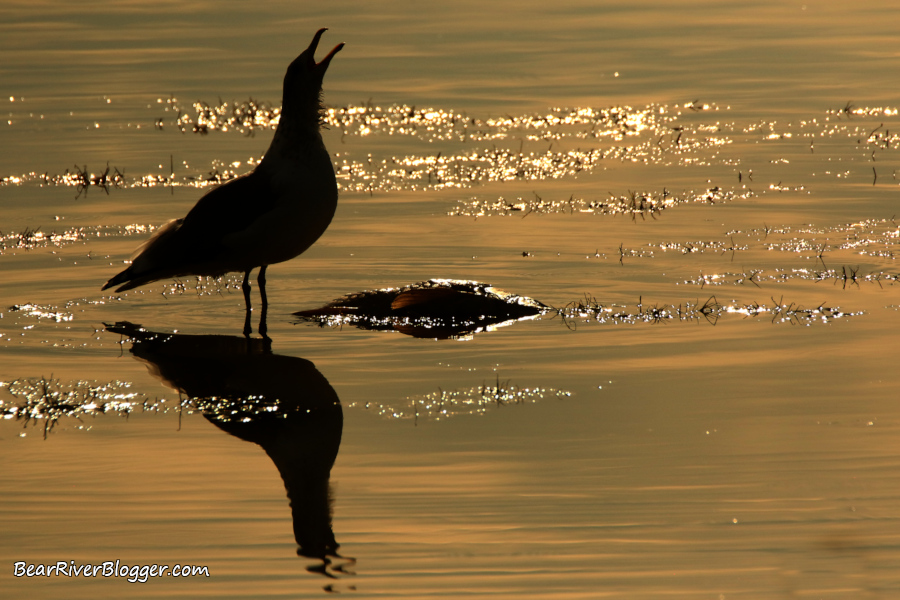
On one particular morning, while driving around the west side of the auto loop last summer, I noticed how brilliant the wildfire smoke had made the early morning sun glisten on the water’s surface as I watched a nearby gull feeding on a dead fish.
In very poor light such as this, I normally just enjoyed the moment and wouldn’t even consider reaching for the camera, but the gull seemed quite content as it fed on the dead fish while I quietly watched from my parked vehicle.
The color and brilliant lighting on the water were too much to ignore, especially since the gull wasn’t paying even a sliver of attention to me, so I decided not to waste this magical moment and try a few different camera settings to see what I could do with this most unusual but incredible scene that lay before me.
I found myself photographing directly into the low-lying morning sun, the only angle I had to work with, and something I traditionally wasn’t fond of at all as these types of directly backlit scenes, albeit small in size, tend to be quite bright and have quite a wide dynamic range (lots of darks and lights) for the camera to properly expose.
Even with the smoke-filled atmosphere, this particular scene was so bright from photographing directly towards the rising sun, its rays glistening off the nearby water all around the gull, I dropped the exposure down one full step, and my camera’s shutter still ended up running at 1/8000, but that is quite common when photographing backlit subjects such as this.
The resulting image darkened the bird quite a bit, to the point where little to no feather detail is visible, but a nice silhouette was produced with the glistening water surrounding it.
All in all, I would say it was a very nice image despite the terrible lighting conditions and difficult angle I had to photograph from.
Another similar image was photographed on a different trip around the refuge auto tour route when I came across a great blue heron sitting on an outcropping of rocks that was also backlit by a smoke-filled early morning sunrise.
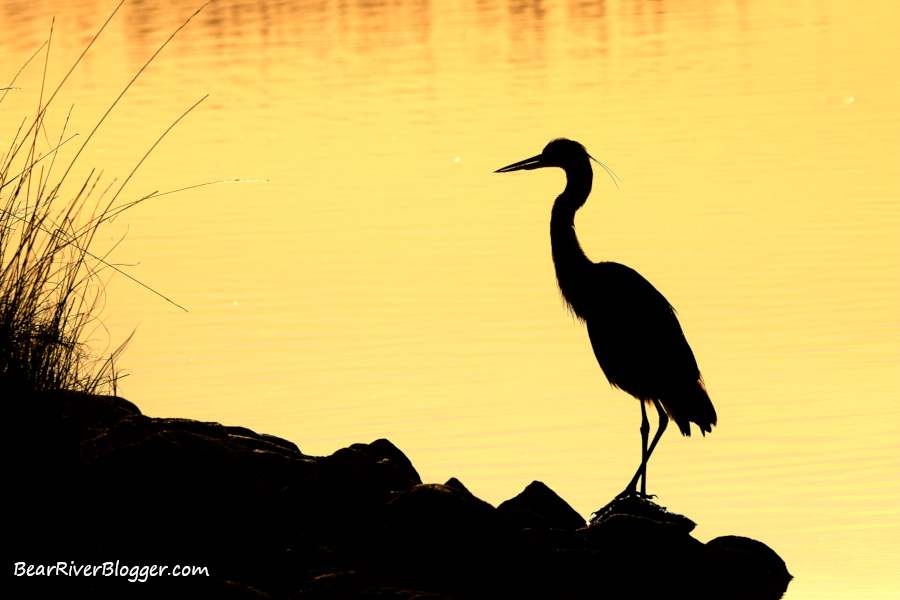
Now I don’t let poor light conditions of any kind dictate when I head out to photograph birds, and every time I do visit the bird refuge early morning or late evening with my camera I watch for backlit bird scenes similar to the ones I have posted here.
It does take a little bit of patience and practice, but photographing birds with backlighting can produce some incredible images, especially when the sky is filled with smoke or haze, like it sometimes is here during the summer months.
If you are an avid birdwatcher or just someone who loves nature in general, including photographing the natural world around us like I do, I invite you to sign up for email notifications for future blog posts where I share my birdwatching and nature photography excursions, as well as my enduring love for nature here on my website.