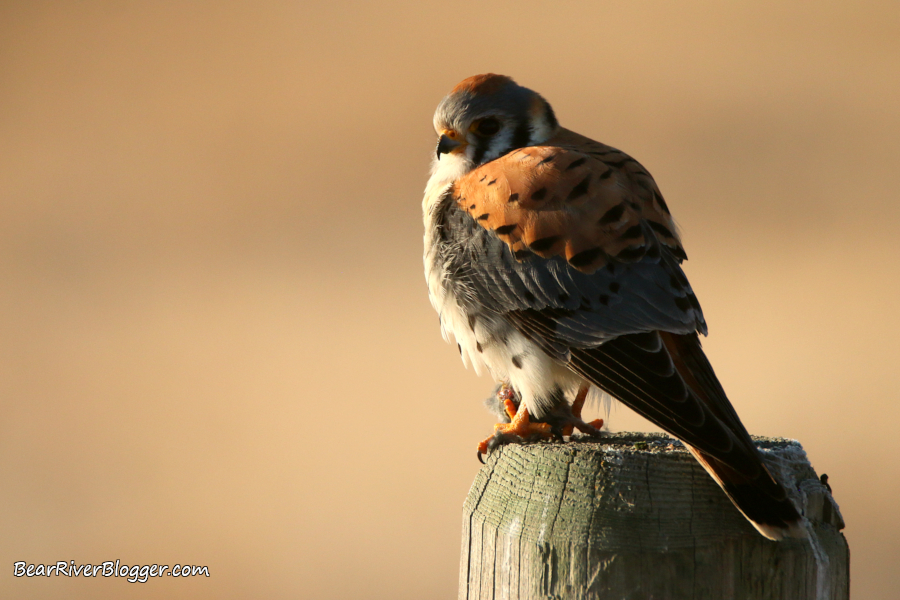
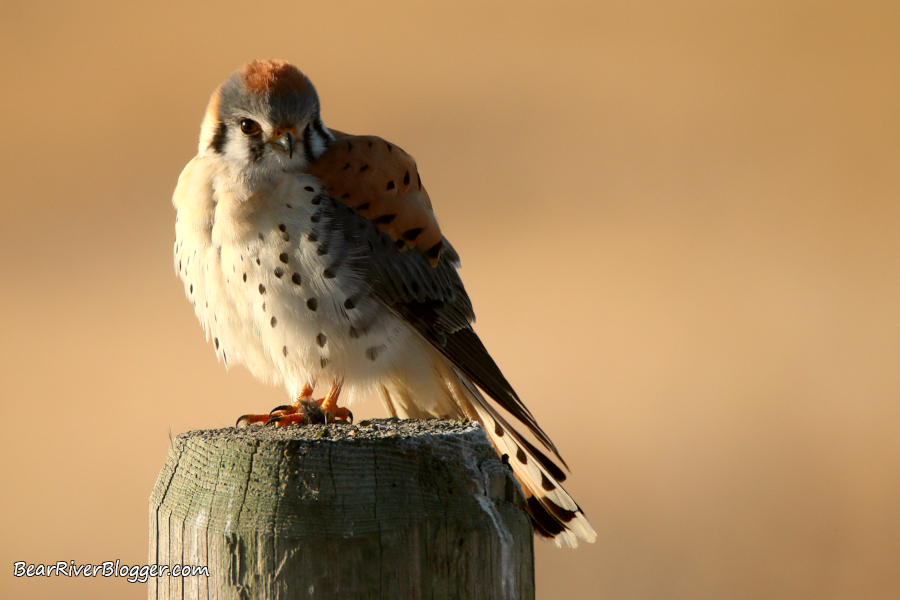
With its richly colored plumage, the male American kestrel is, without question, one of the most beautiful birds in nature, well, at least this birdwatcher thinks so, that is, and one most certainly worthy to be in front of a camera lens, whenever and wherever possible.
During winter, as I drive to the Bear River Migratory Bird Refuge auto tour route, I am always scanning the roadside fence posts along Forest Street for a kestrel willing to sit and pose for a few portraits.
(Advertisement)

As other bird photographers already know, kestrels can definitely be skittish at times, which routinely makes photographing these tiny raptors a bit of a challenge, to say the least, but it is well worth it when one does sit and stay for a while, like this male did a couple of weeks ago on my way down to the auto loop.
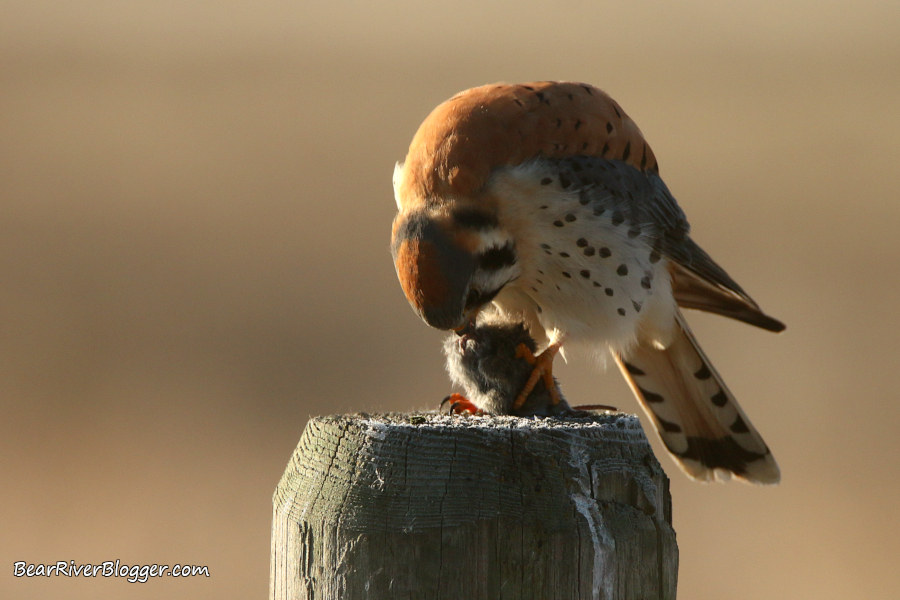
American kestrels feed on mice and voles during winter, and that is exactly what this one was doing, hunting for rodents, when I approached it.
Initially, when I spotted the small, colorful falcon, he was perched on a metal fence post and actively scanning the ground below for a meal.
I’m never too excited about photographing birds of any kind on these types of posts; they just don’t make for good photos in my opinion, but he seemed preoccupied, so maybe I should at least try to get a decent photo or two, regardless of the ugly perch, since this winter has been pretty slow for photographing kestrels.
Those worries about a distracting metal perch soon vanished as he abruptly dove into the nearby grass and pounced on a small rodent, quickly leaving the scene afterwards and landing on a larger, wooden fence post that allowed him to stand and casually eat his meal.
(Advertisement)

(As an Amazon Associate, I earn from qualifying purchases.)
Luckily, the kestrel was laser-focused on the task at hand and didn’t seem to mind me slowly pulling up to him once again and taking some photographs and video (shown below) of the quiet moment he was seemingly sharing with me.
When I spot an American kestrel in a possible location for a photograph like this, along Forest Street or anywhere else I drive to find them, I approach in my car very slowly and cautiously move myself even more so while grabbing my camera from the passenger seat and pointing it out the window in hopes of not spooking these already skittish birds.
Sometimes they sit and pose, other times they bail before the car even comes to a complete stop, long before you can even reach for the camera on most days, from my experience.
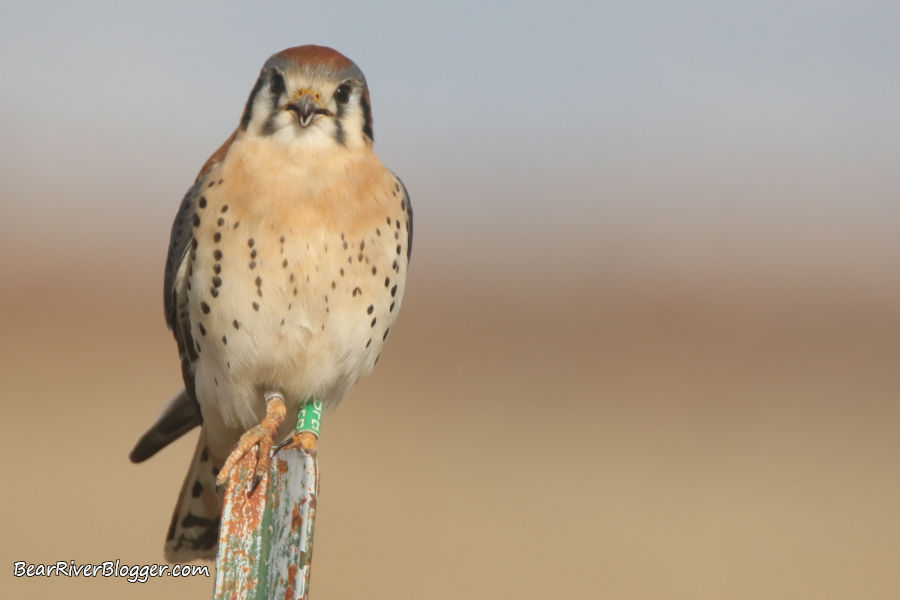
That’s just how it is when photographing American kestrels, you win a few and, well, you also lose a few, but either way, these small falcons are worth the frustration when you do come home with a few images that make you smile, like these do for me.
You might have noticed how smooth and clean it is behind the kestrel in all of these photos, commonly referred to as bokeh when the background is blurred like this.
Here’s what the backdrop really looked like and how much, in the right circumstances, that is, you can blur the background to essentially “clean up” the image.
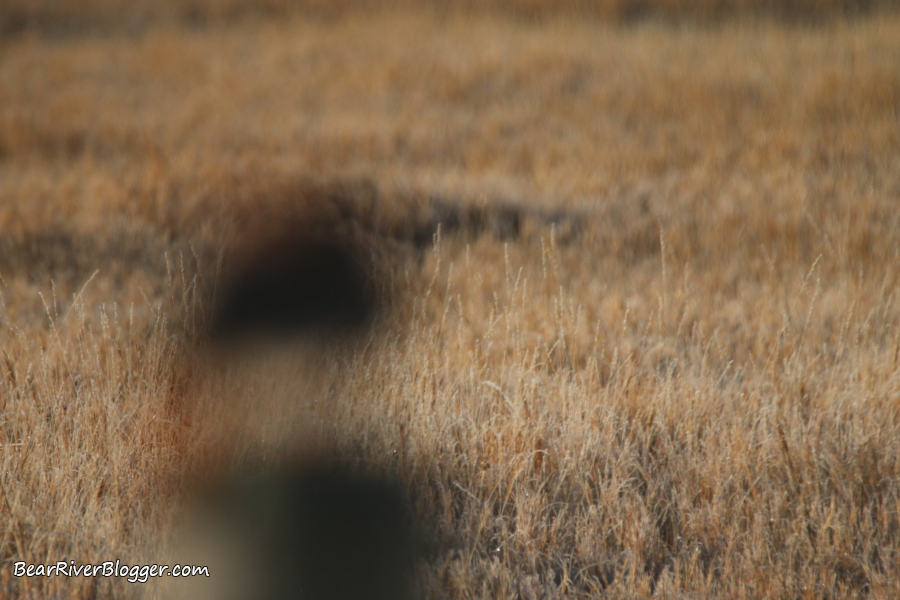
None of this was done in post editing on a computer, but solely accomplished in the camera with a combination of several things: my lens, the aperture setting, and how far away the background was from the subject, in this case, the grassland behind the male kestrel.
It’s a bit of an in-depth subject to quickly explain here, but creating bokeh in nature photographs is a fairly easy process if you understand the basic principle behind it.
I would like to know what percentage of American kestrels have stayed perched and allowed me to take a few photographs like this over the years; unfortunately, however, I never recorded that information and can only assume it is quite low, maybe less than 10%, from my estimation.
So don’t feel bad when kestrel after kestrel flies off long before you even touch the camera, it happens to me more times than it doesn’t, a lot more, in fact.
The only time kestrels seem to be content sitting still is during those very cold, arctic winters we sometimes get, and, as a result, they and birds of all kinds stay put whenever possible to conserve any energy they can.
But no matter what time of the year it is, I will always try to photograph American kestrels whenever the opportunity presents itself because, in my opinion, they are some of the most colorful and beautiful birds in nature, and I never get tired of viewing them, even if they won’t sit still for a portrait.
If you are like me, an avid birdwatcher and nature photographer, I suggest subscribing to our website to receive emails for future blog posts similar to this one about birdwatching, nature, and outdoor photography.
(American kestrel feeding on a rodent. For short nature photography tips and interesting stories about the natural world around us, subscribe to our Bear River Blogger channel on YouTube for videos and updates from our travels while out in nature, both on and off of the famed Bear River Migratory Bird Refuge.)