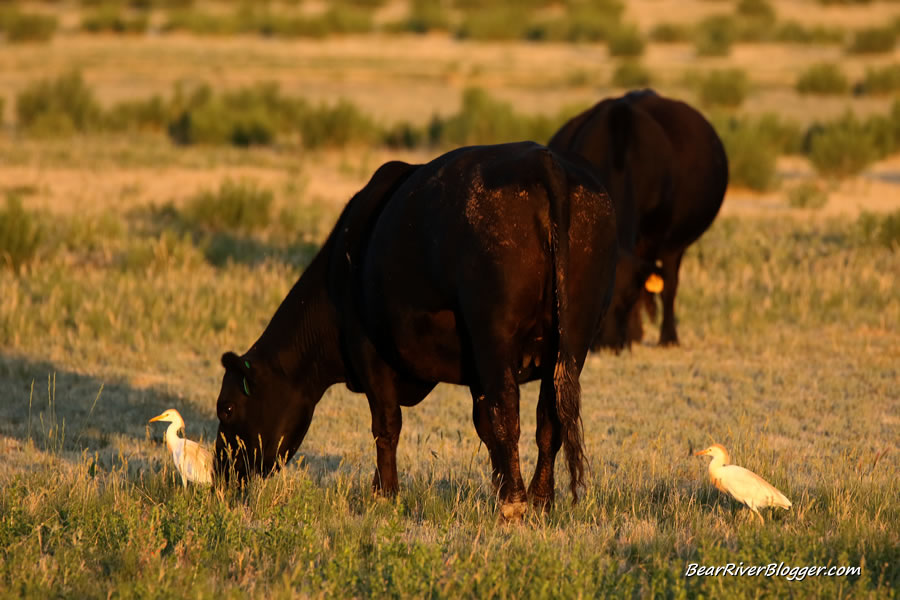
In the birding world, there is a strange but interesting relationship in nature between birds and beasts when it comes to cattle egrets and cows.
It’s not a mutual relationship either, by the way. The egret is definitely the sole beneficiary in this odd but unique gathering.

Novice birdwatchers might find it a bit strange when someone tells them one way to surely find cattle egrets is to look for, well, you guessed it, cows.
It’s true, and I have witnessed it myself numerous times while driving to the Bear River Migratory Bird Refuge auto tour route.
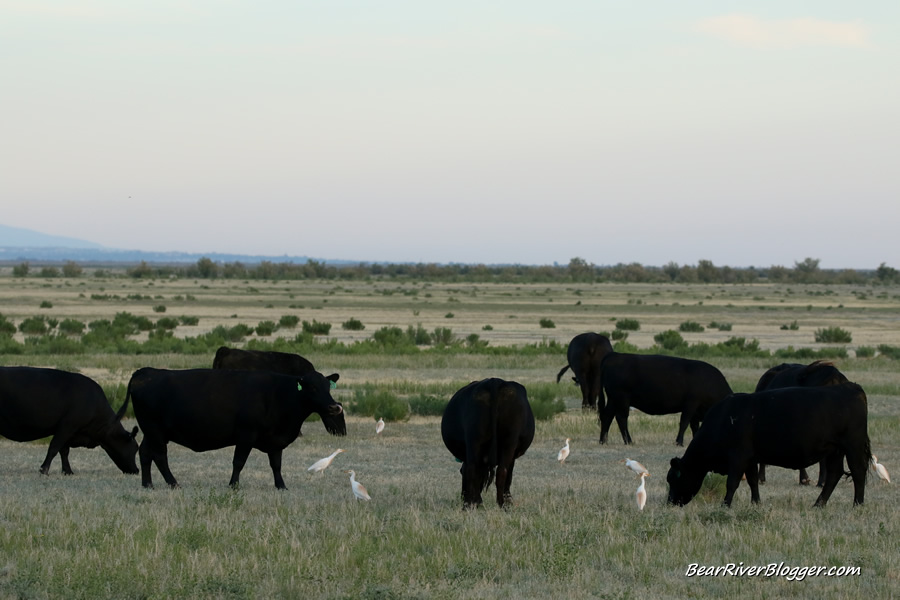
On Forest Street, cattle are oftentimes present during the summer on some of the private rangelands that border the county roadway.
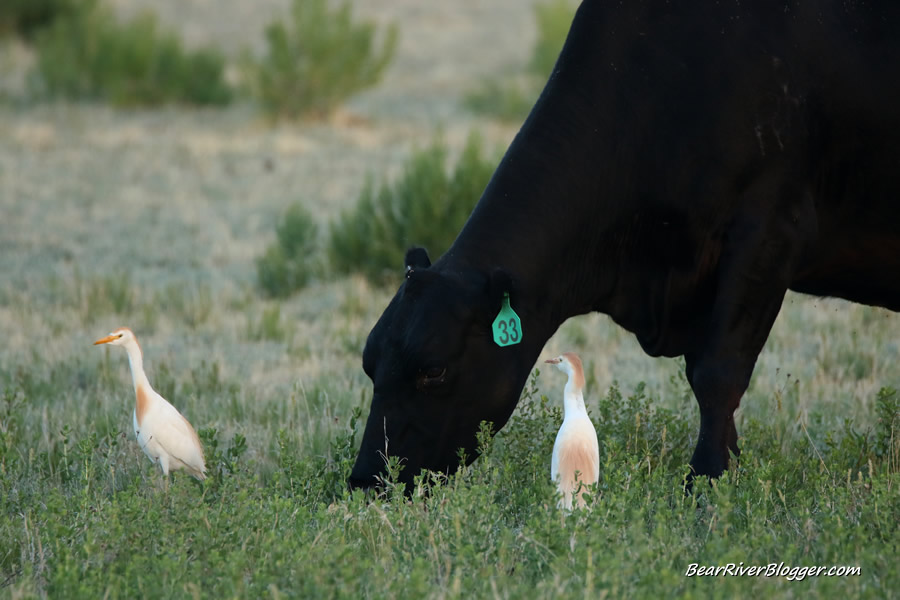
And many times over, I forget how many, to be exact, I have seen the beautiful cattle egret intently and closely following individual cows as if there was something to be had. Well, to be honest, there is, at least for the egret, that is.
Cattle egrets closely follow cows to feed upon the grasshoppers, crickets, horseflies, moths, spiders, and other insects kicked up by the hooves of the cattle. They literally follow the cattle around to feast upon a host of disturbed insects.

My neighbor has about 50 cattle in a pasture just down the street from my house, and I witnessed this phenomenon just last night, in fact. That’s actually the motivation and inspiration for this particular blog post.
It reminded me of this unique and one-sided relationship between bird and beast. The cattle really don’t benefit from it at all, but the egrets surely cash in on a quick and easy meal when these opportunities arise.
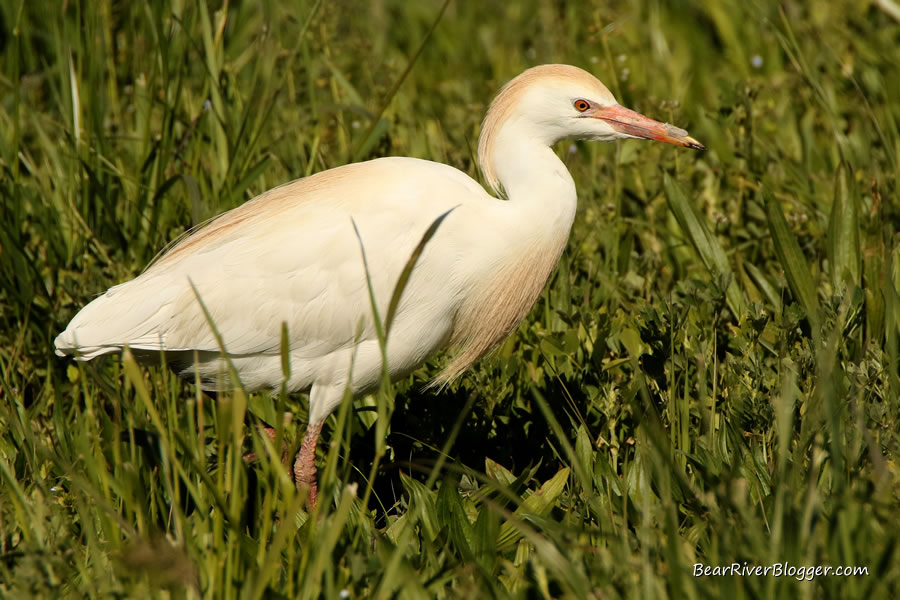
Cattle egrets are found on the Bear River Migratory Bird Refuge, but they aren’t very common there, at least from my own experience, that is. They love foraging and stalking insects in pastures and rangelands that have either been disturbed by fire, mowing, tractors, and especially cattle.
In fact, the times I have seen them in pastures following cattle around far outnumber the times I have seen them stalking the edges of a marsh or wetland.
Cattle egrets are migratory, spending their winters in Mexico and along the southern coastline from Texas to Florida.
(Gosky Spotting Scope)

(As an Amazon Associate, I earn from qualifying purchases.)
Here in Utah, we get migratory cattle egrets stopping over, with a reportedly scarce population possibly breeding in the far portion of northern Utah, east of the Great Salt Lake.
An interesting fact about the cattle egret is that, according to the Cornell Lab of Ornithology, cattle egrets are not native to the Americas, somehow coming from Africa and reaching South America in 1877 and slowly working their way northward into the United States decades later.
So far, I haven’t seen any cattle egrets on the Bear River Bird Refuge this year, but I have seen them on Farmington Bay WMA during spring migration.
Subscribe to our website
Our YouTube Video Of The Week
(For short nature photography tips and interesting stories about the natural world around us, subscribe to our Bear River Blogger channel on YouTube for videos and updates from our travels while out in nature, both on and off of the famed Bear River Migratory Bird Refuge.)