When it comes to bird photography, each of us has a species or two categorized in our own minds as, to put it bluntly, a nemesis bird.
These are birds which, seemingly easy for some, throw us a curveball each and every time we attempt to get a decent image of them while out in the field.

The northern harrier is my nemesis bird, and I rarely get opportunities to photograph them despite this medium-sized raptor being very common in northern Utah.
I know this sounds far-fetched, but they always seem to know just when I am reaching for my camera and consciously decide to turn and fly just out of range as a result.
A couple of days ago, while searching for the famed brown pelican, which has recently shown up on the Bear River Migratory Bird Refuge, I came across a female northern harrier perched on a fence post.
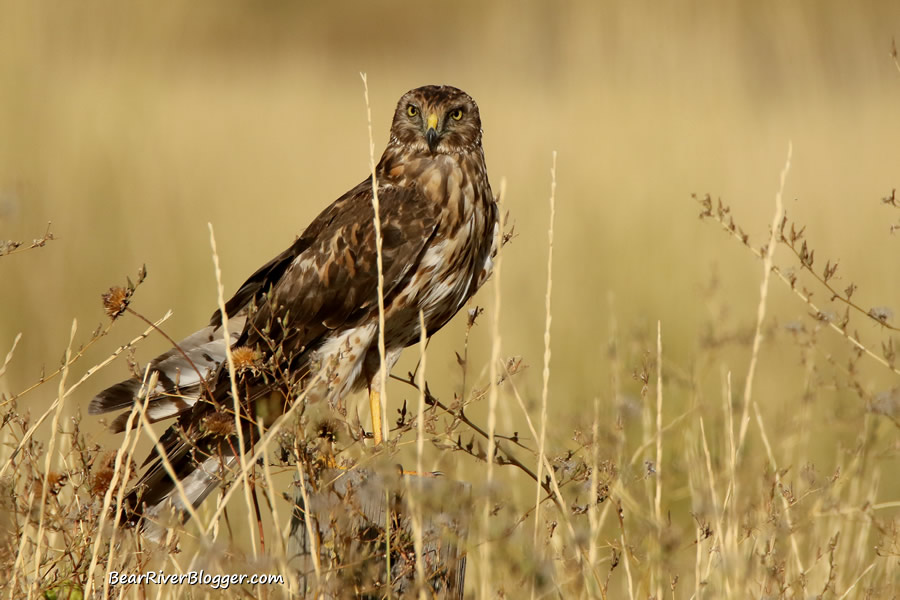
She was sitting just off the side of Forest Street, the 12-mile road that leads to the refuge auto tour route.
Northern harriers are routinely viewed along Forest Street even though they never sit for me, but this one did, however, for some unknown reason.

After driving past the female harrier, I turned my car around and headed back towards her, a technique that almost never works out by the way, and slowly approached the brown raptor with my camera at the ready.
Moderate success was achieved as I was able to get a couple of good photos from my efforts, but I wanted to get a slightly better angle in hopes of getting a clear view of the bird with no annoying ryegrass in front of her.
I slowly inched my car closer and closer, but just as I was in the perfect position, a large pickup truck came down the road from the other direction and caused the harrier to flush just as I was getting ready to push the shutter button.
That is the frustrating part of nature photography, but one that compels me to try again someday.
If I always came home with perfect images, I’d probably give up photography and try something else.
(Gosky Spotting Scope)
(As an Amazon Associate, I earn from qualifying purchases.)
Photographing nature can be a bit frustrating, but also quite rewarding as well.
Even though I didn’t get the angle on this bird I was hoping for, I am pretty pleased with what I came home with nevertheless.
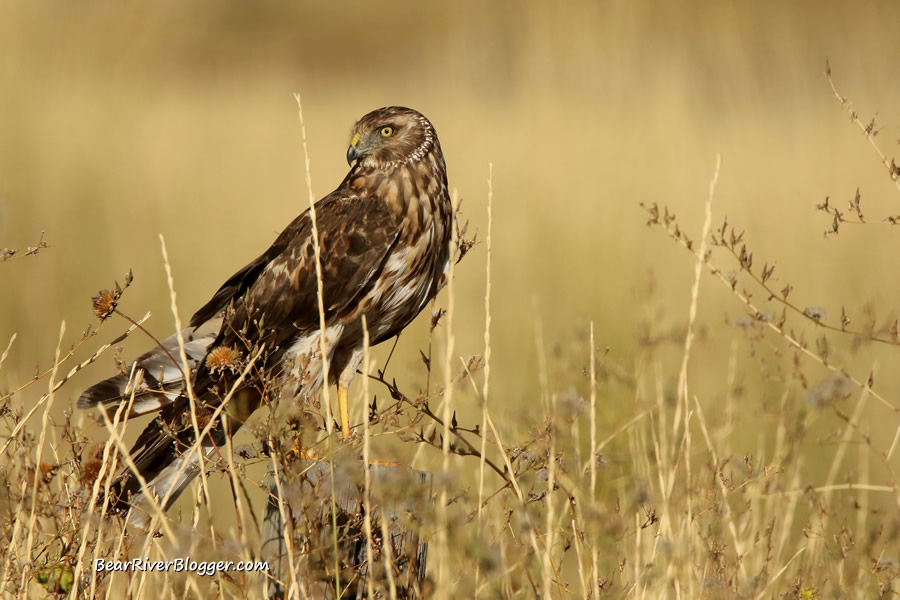
Northern harriers are a very common species of bird on the refuge, and they can easily be found most of the year flying low above the grassy upland areas or alongside the gravel auto tour route in search of mice, voles, and small birds.
I have also watched them scavenge on duck and shorebird carcasses when the opportunity presents itself.
The Bear River Migratory Bird Refuge is just shy of 80,000 acres of protected marsh and upland habitat, suitable for northern harriers and a variety of other species of birds.
It is a fantastic place to come and photograph nature, as well as just to relax and unwind from the hustle and bustle of modern society.
You can find out more about the Bear River Migratory Bird Refuge by visiting their website, which has their contact information as well as social media outlets.
I also suggest following my blog here by signing up for blog post notifications via email for future nature-themed articles.
A great amount of my time behind a camera is spent at the refuge throughout the year, so if you are unable to visit the Bear River Migratory Bird Refuge in person, I hope my blog can help give some sense of what a wonderful place it is for anybody who appreciates nature.