For as long as I can remember, birds have always had a place in my heart.
And this passion for our feathered friends started several decades ago when I was 10 years old and one of my brothers, a couple of neighborhood friends of ours, and I got into raising pigeons somehow.
It’s been far too long for me to remember the particulars of why and how it all got started, but ever since that very day when my parents agreed to let me have a few pigeons in the backyard, I’ve had a fondness for birds.
I was the only one of our group that actually kept raising pigeons for years and years afterwards, up to and including just a few short years ago when I had to make the unfortunate decision to leave the pigeon flying hobby for good.
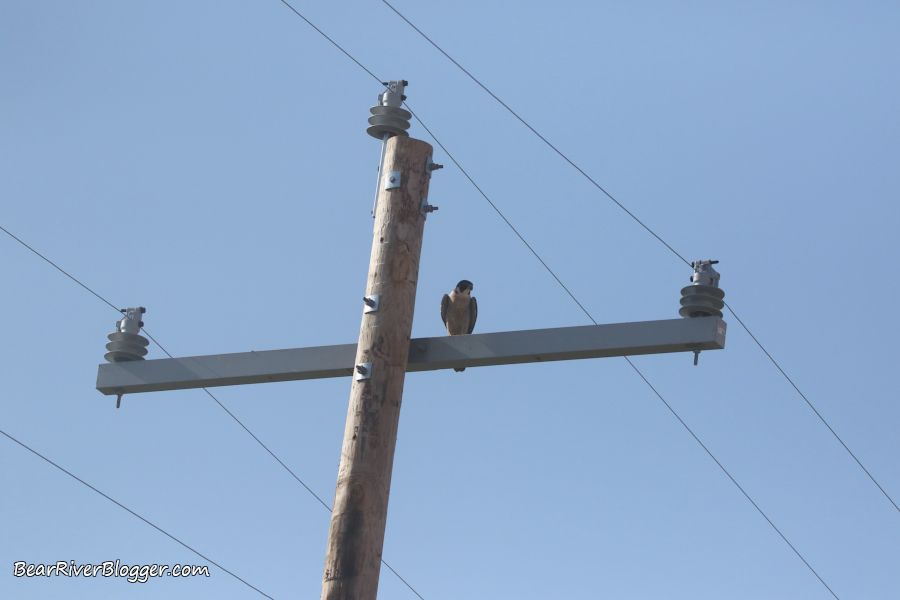
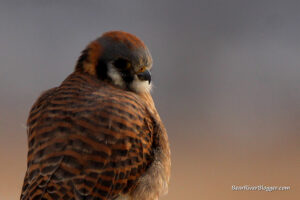
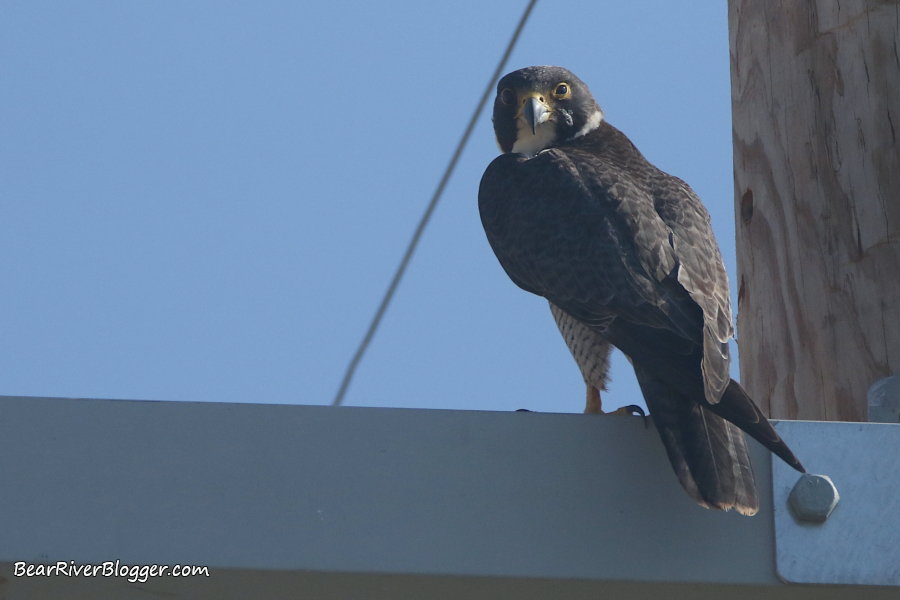
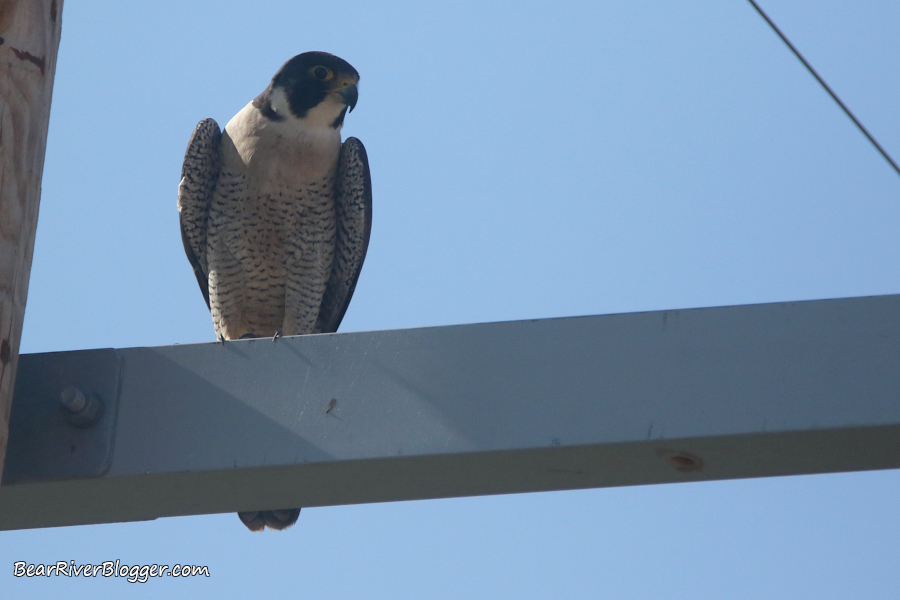
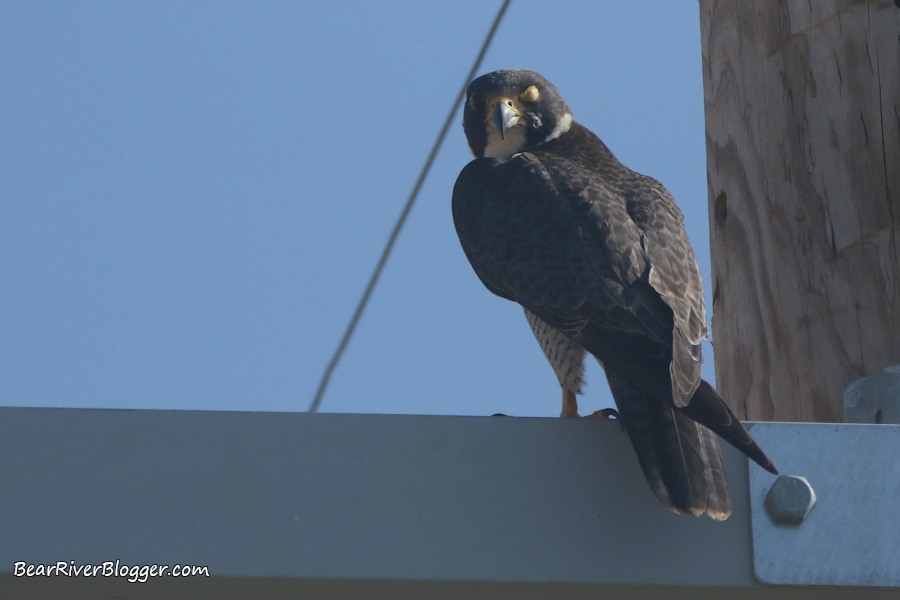
This very morning, as coincidental as it seems, I was able to photograph the exact reason why I finally chose to give up my pigeons when I spotted a male peregrine falcon perched on a nearby power pole, scanning the surrounding farmland for a potential meal, I would presume.
It was a bittersweet moment for me today while I was photographing what I surmise was a male peregrine falcon, as I really do miss training my homing pigeons, but I also admire and love peregrines, as well, and, unfortunately, the two just don’t mix, so one of them had to go even though my pigeons had the bigger part of my heart.
Peregrine falcons hunt and eat birds almost exclusively, and pigeons are a big part of their diet in certain areas, especially in urban cities where feral pigeons are quite common.
With the Bear River Migratory Bird Refuge and adjoining Great Salt Lake so close by, I would assume the endless bounty of waterfowl and shorebirds would entice the falcon to hunt there instead of my tiny corner of the world, but that just wasn’t the case for some unknown reason.
Losing a pigeon or two almost every time I flew them, oftentimes having to watch the grueling scene unfold before me hundreds, if not thousands, of feet directly above, was just too much to handle, so I made the hard decision to get out of the hobby I have loved for over 4o years.
Don’t get me wrong, however, I don’t blame the peregrine falcon one bit for this unfortunate decision I had to make; it was only doing what all predators have to do to survive: hunt or perish.
In addition to peregrine falcons, I’ve had to put up with Cooper’s hawks, prairie falcons, and even merlins over the years, but it was the peregrine falcons that most consistently decimated my flock and were the deciding factor for me to pull the plug on flying pigeons ever again.
Being an avid birdwatcher and photographer, I have been able to watch falcons hunt and sometimes capture prey on the Bear River Migratory Bird Refuge, and it is quite a sight to see as the demands of nature unfold right in front of you.
In fact, on one trip to the bird refuge, I was able to watch and photograph a prairie falcon go after a great blue heron, a most notable difference in size between predator and prey, but a scene that will forever be ingrained in my mind.
From my readings, I have learned that peregrine falcons have taken down birds as big as sandhill cranes and captured ones as small as hummingbirds, which is why there is such a big difference in size between the male and female peregrine.
The smaller males are quicker and more agile, better suited for smaller, faster prey, while the much larger female, said to be as much as a third larger than male peregrines, is able to take down much bigger birds the male would have a hard time handling.
This variation in size between the male and female peregrine falcon gives the nesting pair a much larger pool of prey to choose from when food is hard to come by.
Although peregrine falcons are year-round residents of this portion of northern Utah, they aren’t as commonly seen as one might expect.
I rarely find peregrine falcons on the bird refuge, maybe one or two per year, and actually see their counterpart, the prairie falcon, a lot more commonly.
If truth be told, it is quite unusual for me to see this male peregrine perched on the same power pole almost daily for the past week, which makes me wonder if it is hunting the area to support a nest somewhere nearby.
Either way, and despite being the reason why I no longer have my homing pigeons, it was such a treat to see a peregrine falcon so close like this, as it surprisingly let me get almost underneath him before flying off to perch on another pole.
I doubt I’ll ever get back into flying pigeons again; it’s just too hard to continually lose birds I love like that, but despite my loss, I will always admire the peregrine falcon and enjoy each and every moment I get to view and photograph this majestic falcon.
If you love birds and birdwatching as much as I do, I suggest subscribing to our website for email notifications for future blog posts where we share our love for birds and nature photography, both on and off the famous Bear River Migratory Bird Refuge auto tour route.
Lastly, we do offer unique and stylish birdwatching t-shirts and hoodies, completely designed by me, through our online store, so if you are in the market for a nature-themed shirt, either for yourself or as a gift, check out our apparel and other items offered.
We truly appreciate your readership and support for our website.
Our YouTube Video Of The Week
(For short nature photography tips and interesting stories about the natural world around us, subscribe to our Bear River Blogger channel on YouTube for videos and updates from our travels while out in nature, both on and off of the famed Bear River Migratory Bird Refuge.)