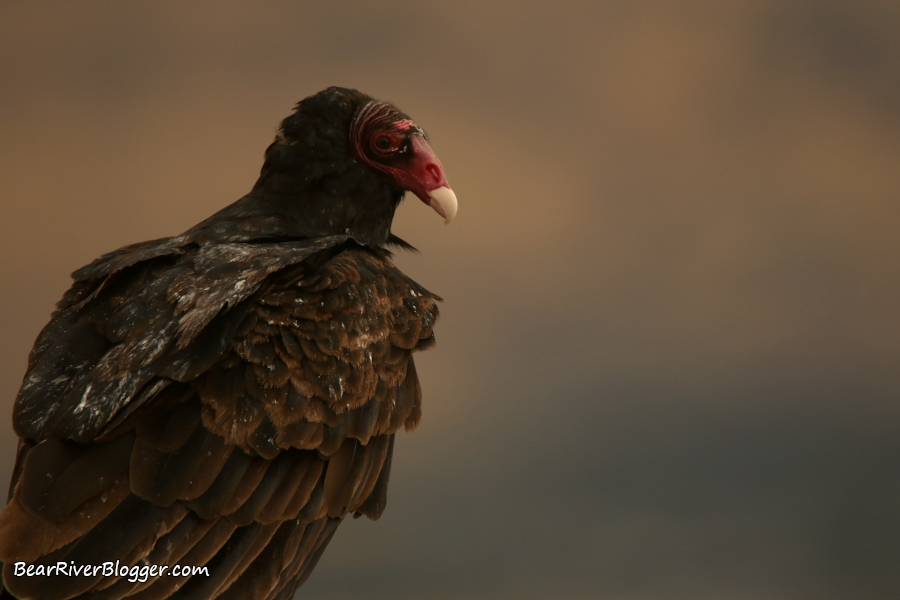
I might be in a small group with this one but yes, I actually do think turkey vultures are very beautiful and quite interesting in their own right- birds I don’t see nearly enough of each summer, either on the Bear River Migratory Bird Refuge or elsewhere, for that matter, before they migrate south for the winter.
Despite their often grotesque feeding habits, vultures as a whole, belonging to the Cathartidae family of birds that even includes condors, are a vital part of nature, more so than most people realise, so let me explain my fondness for them.
Although not really classified as a true raptor, per se, turkey vultures do eat meat, however rarely attacking and taking live prey for a meal, but due to an excellent immune system and a highly acidic stomach, turkey vultures feed almost exclusively on carrion, i.e., deceased, discarded, and quite often rotting and diseased mammal and other wildlife carcasses that have lost any and all food value for other flesh-eating birds and terrestrial predators.
It’s not a very pleasant choice for a meal, I must admit, but vultures are essentially cleaning up the ecosystem by feeding on carcasses ignored by other meat-eaters that would otherwise accumulate and cause the spread of diseases from the rotting flesh.
Like I said, it’s not a very delightful way for a bird to feed, but an important part of the ecosystem, nevertheless.
While driving to the Bear River Migratory Bird Refuge auto tour route this morning to see how the prescribed burn went last week and for a little early fall birdwatching, I noticed five vultures soaring on the stiff northerly breeze, and I had to pull over for a few moments to enjoy watching them sail in the wind.
Like many other birds, turkey vultures take advantage of stiff winds and thermals to stay aloft for long periods of time with only a few wingbeats here and there, when needed for propulsion, as they soar in search of a carcass to feed on, using both an enhanced sense of sight and smell to help locate their next meal.
In fact, unlike most other birds that have a poor olfactory system, the sense of smell is so highly refined in turkey vultures that they can detect odors measured in a few parts per trillion, which is why they are often seen sailing low to the ground in hopes of picking up a scent trail to their next meal.
Not only do turkey vultures have nostrils larger than other birds, but the part of the brain that processes smells is also much larger than their avian counterparts, giving vultures a heightened sense of smell to detect odors from reportedly up to five miles away.
Several years ago, when the Bear River Migratory Bird Refuge had drawn down unit 2 for construction work, large die-offs of carp started to accumulate on the scorched mudflats, attracting dozens of turkey vultures to feed on numerous piles of dead fish.
Trust me, it wasn’t a very pleasant scene for several reasons; both my eyes and nose were being taken to the limits of what could be tolerated, but the turkey vultures were attracted to the large pile of dead carp and provided a very valuable service by cleaning up the rotting carcasses over the next couple of weeks.
On a trip to the bird refuge almost 2 years ago to the day, I was able to photograph a turkey vulture on Forest Street as it sat perched on a fence post of some kind.
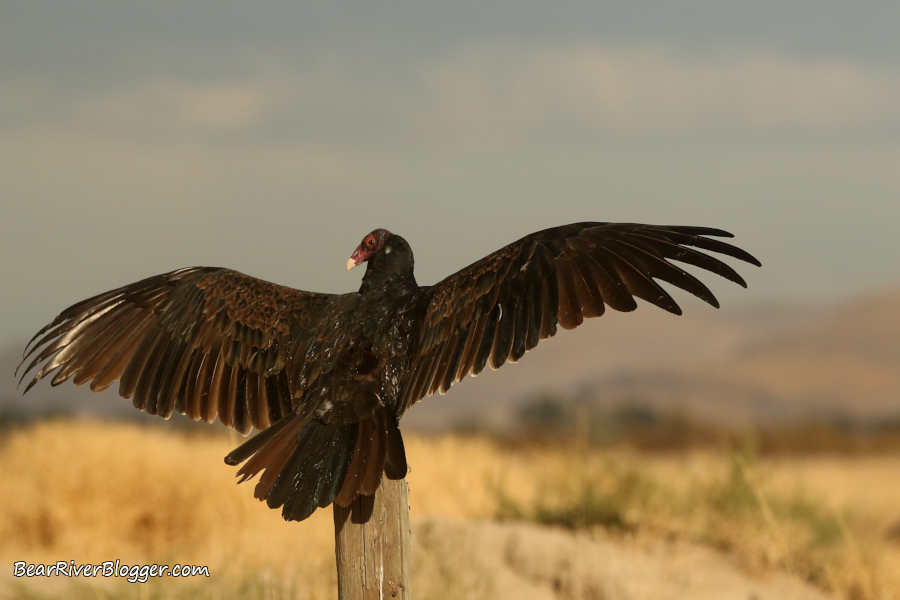
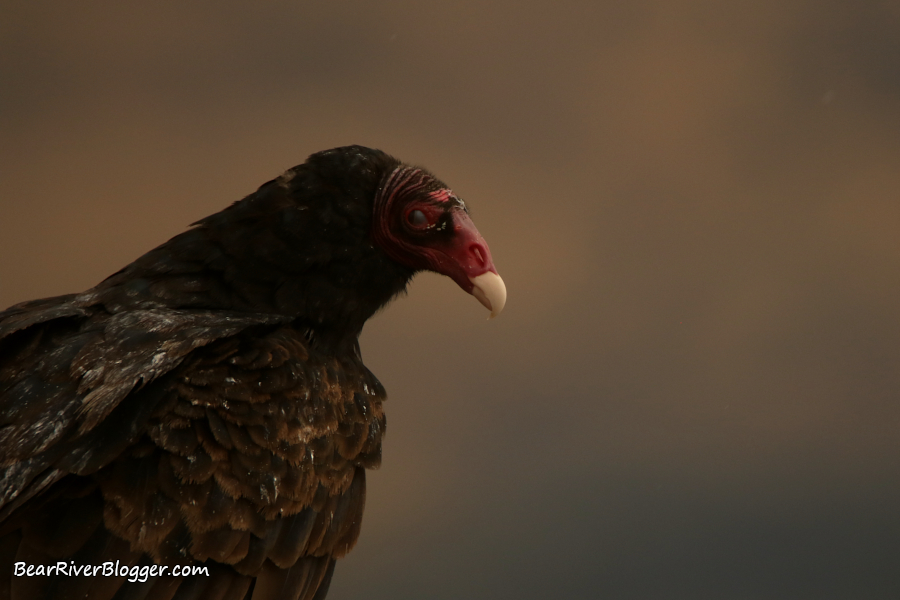
In fact, the pictures for this blog post are from two consecutive days I found turkey vultures perched somewhere on the roadside on my way down to the auto tour route, something that rarely happens, so, naturally, I had to stop and take a few photographs on each trip.
I don’t always see turkey vultures in such close proximity to the road like this; most of the time I see them sailing in the wind from a distance so I have very few vulture images and why they aren’t talked about much on my website.
Despite my lack of vulture photographs, something I’m always hoping to rectify when I go birding, I will say these old world birds are very unique and beautiful creatures and a very important part of the ecosystem; and I hope this post has shed some light on why turkey vultures are simply an amazing part of nature, one that should get more praise than they do for doing a very dirty but beneficial job in the natural world around us.
Subscribe to our website for future blog post notifications.
Our YouTube Video Of The Week
(For short nature photography tips and interesting stories about the natural world around us, subscribe to our Bear River Blogger channel on YouTube for videos and updates from our travels while out in nature, both on and off of the famed Bear River Migratory Bird Refuge.)

i love vultures!! been following your posts for a while now but had to comment for them lol